Reveal What Your Product Does, And Selling Gets Easy
You write out every feature, every benefit, every reason someone should buy. You send it to your list, or post it wherever your readers gather, and then you wait.
Nothing happens.
A customer on the help desk once told me something that has stuck with me ever since. She said even when things are explained to her, it sometimes just does not click. I think about that line more than almost anything else when I sit down to write something I want you to act on.
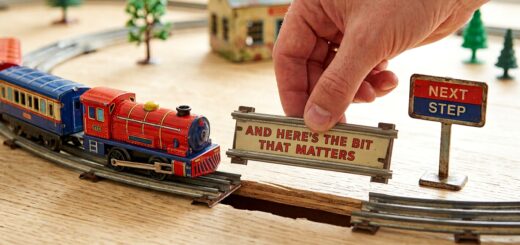
Here is what took me a long time to notice: a list of what your product does is not the same as showing you what your product does. One is a description, the other a demonstration, and only one of them clicks.
If you have ever wondered why a perfectly good offer sits there unsold while something far simpler gets snapped up, this is usually why. Nobody buys a feature list. People buy the moment they can picture the thing working for them.
Telling Is Not The Same As Showing
I believe everyone has their own God given skills and talents. Mine happens to be explaining tech in plain language, without jargon, to people like you who have been made to feel stupid for asking. What I have noticed, after fifty years of trying to do that well, is that explaining is not the same as showing.
Most marketing I see leans entirely on telling. It lists specifications and describes outcomes. It uses words like powerful and transformative, and hopes the reader fills in the rest themselves.
You’re often told AI is so easy it will do anything for you. It will not, not without some understanding of how to work with it. The gap between that promise and the reality is exactly the gap between telling and showing.
If you’ve already been oversold once, you won’t trust the next description either, however accurate it is. What you’ll trust is watching something happen in front of you.
What I Learned By Delivering, Not Describing
Early in my career I worked on an interactive video text project that was delivered to clients in Florida. That is much the way I now try to let a customer watch a tool work rather than simply read about it. I made a couple of trips out there myself to help get it running properly for them.
Nobody won that client over with a brochure. We built the thing, showed them exactly what it did for their business, and let the result speak for itself.
On the strength of that one delivered project, I was made leader of the next one. Nobody had to argue my case for me. The work had already made it.
The same thing is true of whatever you are trying to sell now, whether it is a product, a service, or simply an idea you want someone to take seriously. Show it working and you rarely have to argue for it at all.
Let People Watch The Thing Work
You do not need a studio or a following to do this. You need one small, honest moment where your reader can see cause and effect for themselves.
People buy the moment they can picture the thing working for them.
Instead of listing what your product does, walk someone through what happened when you used it on one real problem. Instead of promising a method will save time, show the before and the after, plainly, with nothing smoothed over.
I have written about this same idea from a few different angles in other articles I have shared recently. Once you notice it, it turns up everywhere.
One small demonstration beats a dozen confident claims. It costs you nothing but a little honesty about what really happened, which is usually more interesting than the polished version anyway.
Where This Goes Wrong
The common mistake is reaching for a bigger claim when a demonstration would have done the job quietly and completely. A bigger claim asks your reader to trust you. A demonstration simply shows them.
This matters even more if you’ve been talked down to before, or made to feel that asking a question proves you’re behind. You don’t want another confident voice telling you something is easy. You want to watch it be easy, in front of you, and decide for yourself.
I still catch myself slipping back into telling mode when I am tired or rushing an email out the door. It is the fastest way to lose a reader like you who was truly interested a moment ago.
The One Question To Ask Before You Publish
Before you send anything out this week, read it back and ask one plain question. Have I shown this, or have I only told them about it?
If every sentence is a claim, find the one place you can replace a claim with a small, specific moment instead. One customer, one result, one honest before and after. It does not need to be dramatic, it just needs to be real and specific enough that your reader can picture it happening.
That one change is usually worth more than an entire paragraph of confident description. It is also, in my experience, the difference between a reader who nods politely and one who buys.
You do not need to be clever to do this. You just need to be willing to show your actual work, imperfections included, rather than the tidied up version of it. That is a much easier thing to be good at than you might think. It tends to earn trust faster than almost anything else I have tried.
Talk soon, Jennifer Caroline
Can You Click Send?
“If You Can, Enter Your Details Below And I’ll Show You How To Make A Life-Changing $8,000+
A Month From Home…
Privacy Policy: We value your privacy. You can unsubscribe from receiving future emails with 1 click at any time.