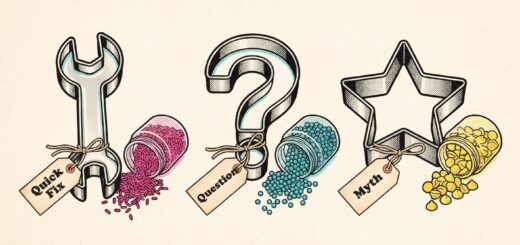
Are PDFs Really Dead? Or Are Marketers Just Bored and Looking for Something New to Declare Dead?
If you’ve spent any time in marketing groups lately, you’ve probably seen the bold proclamation floating around like a motivational poster in a dentist’s office:
“PDFs are dead.”
And—because marketers love dramatic absolutes—it’s usually followed by something like, “No one reads anymore. It’s all TikTok, video courses, and brain implants now.”
But before we mourn the humble PDF, let’s pause and notice something important: Almost every marketer declaring PDFs dead is either selling a video course or a video tool.
Now isn’t that a little suspicious?
Let’s step back and look at what’s actually happening in the real world—through data, psychology, case studies, and a few honest stories from marketers who accidentally disproved the “PDFs are dead” narrative by making more money than expected.
Why Marketers Think PDFs Died (When They Really Just Got Misused)
PDFs didn’t keel over and die suddenly. What actually happened was far more predictable: We collectively abused them. For years, marketers shoved bloated “ebooks” into the world—47 pages of backstory, nine pages of introduction, entire paragraphs starting with “Before we begin…”, and long-winded theory dumps that belonged in a college textbook circa 1997.
Then we topped it off by allowing AI to create 20-page “ebooks” in four minutes, which increased the quantity of PDFs while reducing the quality to somewhere between “generic oatmeal” and “legal disclaimers.”
People didn’t stop liking PDFs.
People stopped liking bad PDFs.
We trained readers to assume that downloading a PDF meant committing to a long, boring slog that would sit in their downloads folder until their next computer upgrade. So instead of taking responsibility for the low engagement, the marketing world—being what it is—declared the format dead instead of the execution.
But What Does the Data Show? Spoiler: PDFs Are Still Very Much Alive
When you look past the Facebook hot takes and into real numbers, the picture looks dramatically different.
Yes, some reports show generic free ebooks declining in conversion—down to around 3.8% in some cases. That’s not a sign of a dying format; that’s a sign of a tired tactic.
Meanwhile, paid PDF products—small guides, mini-books, toolkits, frameworks—continue to rank among the top-selling digital product types online. Revenue-wise, they haven’t slipped at all. If anything, they’ve had a resurgence thanks to creators focusing on short, tactical, high-utility content rather than long-winded manifestos.
And there’s an even bigger trend: Bundles are exploding. A PDF paired with a video walkthrough, or a PDF paired with a short audio guide, or a PDF packaged with templates, checklists, and prompts—all of these combinations convert better than single-format offers. Buyers don’t want more volume. They want more ways to access the same idea.
It’s not that PDFs died.
It’s that the audience evolved and PDFs evolved with them.
Case Study #1: The Tiny 12-Page PDF That Earned $126,000 in 11 Months
One creator shared that she launched a simple, 12-page tactical PDF—not a video course, not a membership, not a high-production anything. Just a $19 PDF that solved a very specific problem in the social media niche. No fluff, no filler, just steps, screenshots, and examples.
It went on to sell 6,600 copies, earning her over $126K in under a year.
The kicker?
Her customers actually finished it. Unlike many video courses, where completion rates hover somewhere between “less than half” and “did they even open it?”, this tiny PDF got read, used, and recommended.
Which brings us to the next case.
Case Study #2: The “Nobody Reads PDFs” Myth — Debunked by a 62% Completion Rate
Another creator in the productivity niche created both a small PDF workbook and a video version of the same material. She assumed the video would outperform because that’s what the trend pieces kept screaming: “People only want video now! Video is the future! Attention spans are shrinking!”
Except… no.
Her PDF workbook had a 62% completion rate, while her video course had a dramatically lower one.
When she asked her audience why, she got answers like:
- “I prefer working through things I can print.”
- “The PDF helped me take action immediately.”
- “I can’t watch videos with kids around.”
- “The workbook made the steps concrete.”
The psychology is simple: Humans complete what they can see, hold, mark up, or check off. Videos can be inspiring, but PDFs are easier to finish, which makes them powerful.
Case Study #3: The 7-Page PDF That Outperformed a Full Video Workshop
A third marketer tested two lead magnets:
- A polished 22-minute recorded workshop
- A fast, skimmable, 7-page PDF version of the same material
To her surprise—and mild irritation—the PDF crushed the video. The reason came down to cognitive ease: Readers knew the PDF would be quicker. There was no need for headphones, no pressure to “sit and watch,” no fear of investing 22 minutes and getting halfway through before realizing it wasn’t relevant. The PDF delivered the promise faster.
Psychologically, PDFs reduce friction and videos increase commitment.
Neither is better.
They simply fit different jobs.
Why PDFs Still Win: The Psychology Behind the Format
People don’t crave video.
People crave clarity.
PDFs have a few psychological advantages that video can’t touch:
- Cognitive Ease
PDFs feel easy to consume. They’re skimmable, scannable, and digestible. When something feels easy, the brain is more likely to believe it’s true, helpful, and worth finishing.
- Completion Bias
We get a dopamine hit from finishing something. A short PDF lets us complete quickly. A long video does not.
- Instant Application
PDFs support action. They can be printed, highlighted, checked off, followed step-by-step, and referenced while doing the task. You can’t follow a video and implement at the same time unless you’re constantly pausing and rewinding like someone stuck in remote-control purgatory.
A Marketer-to-Marketer Story (That Says Everything)
A friend of mine once launched a $49 video training. It was beautifully produced—edited transitions, branded slides, studio lighting. The whole deal. And it sold, but something unexpected happened:
Her top support request wasn’t “Where are the videos?”
It was: “Do you have a PDF version?”
People didn’t want to watch again.
They wanted to use the information.
So, she created a tight 9-page summary PDF.
Refunds dropped.
Reviews went up.
And customers actually implemented what she taught.
The video made people feel inspired but the PDF helped them succeed.
Where PDFs Fail (Because Let’s Be Real)
PDFs aren’t magic. They fall flat when:
- The topic requires demonstration
- The value is emotional rather than practical
- The PDF is too long or generic
- It looks like an unformatted school report
- The transformation is deep and can’t be skimmed
- The audience expects premium production value
PDFs shine when they are tactical, tight, and specific.
They fail when they try to be epic.
So What’s Actually Working in 2025? Bundles.
The strongest-performing digital products right now are not single-format. They are multi-format bundles where the PDF provides clarity, the video provides context, and the audio provides convenience.
A modern digital product is not a format.
It’s a delivery ecosystem.
PDF + Video = “Show me AND let me skim.”
PDF + Audio = “Let me listen while I walk the dog.”
PDF + Templates = “Give me the shortcuts.”
PDF + Screenshots + Loom = “Explain this while I watch.”
You don’t need to create more.
You just need to package smarter.
The Verdict: PDFs Aren’t Dead — Low-Effort PDFs Are.
PDFs still work.
PDFs still sell.
PDFs are still beloved by audiences who want clarity and speed.
What died wasn’t the format.
What died was patience for time-wasting content.
The modern buyer wants something they can finish, act on, and benefit from right now. And a smartly-built PDF delivers that faster than anything else.
Ironically, even the “video-only” marketers end up creating PDFs anyway—cheat sheets, scripts, worksheets, slide summaries, and templates—because implementation happens on paper, not in video.
People don’t buy PDFs.
They buy outcomes.
And PDFs are still one of the fastest ways to deliver an outcome.
What You Can Do Now
Choose one action—just one:
- Tighten your next PDF to a 10–15 page, highly tactical guide.
- Add a simple video walkthrough or a short audio companion to instantly raise perceived value.
- Turn one of your existing video lessons into a PDF cheat sheet for easier implementation.
- Test a PDF-and-video bundle as your next low-ticket entry product.
Ask your audience which format they prefer—you may be surprised how many say “written, please.”
Claim Your Free MP3 And PDF Training: The 3-Part Plan To Topping $100,000 Per Year In Profit
Enter your name and email address below to receive a new lesson delivered to your inbox once a week. Your first lesson will be delivered immediately.
Privacy Policy : We value your privacy. You can unsubscribe from receiving future emails with 1 click at any time.