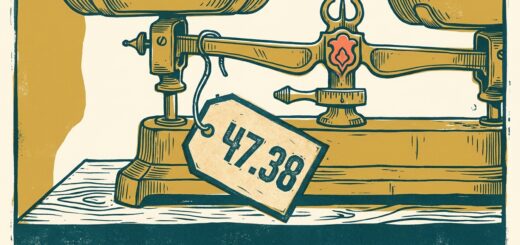
The Surprising Reason Specific Numbers Build Real Trust
Scroll through your inbox for two minutes and count how many times somebody promises you “amazing results” or says their method will “save you so much time.” Nothing in those words tells you anything at all. Your eyes slide straight past them, the same way mine do.
Here is the strange part. The fix for that costs nothing and takes no extra time to write. It is simply using specific numbers instead of vague ones, and once you notice it, you cannot unsee how often the rest of us skip it.
I came across my own first sale date the other day, buried in old notes. It struck me how much more real a date feels than “a while back.” That is the whole idea behind this post: a real number reads as fact, a vague one reads as a guess, and your reader can always tell which one you have handed them.
Why a round number makes your reader suspicious
Think about the last time somebody told you they saved “about an hour” on something. Some part of you quietly discounted it before you had decided to. Now think about somebody telling you they saved forty one minutes. You believed that one without even trying.
That is not you being unfair. It is your brain doing something sensible. A precise number usually means somebody measured, checked or counted it. A rounded one usually means somebody guessed, or worse, made it up on the spot.
Specific numbers read as fact. Round numbers read as guesswork.
Your reader has been burned by inflated claims before, so their guard goes up the moment a number feels too neat. You have probably felt exactly that yourself, reading somebody else’s promotional email.
Think of two emails landing in the same inbox. One promises to “boost your results fast.” The other says it will add 214 new subscribers in the next thirty days. The second one gets opened, replied to and trusted, because it reads like something that happened rather than something hoped for.
The quick test you can run on your own writing
Read back whatever you wrote yesterday and ask yourself one question of every claim. Is there a real number hiding behind this word?
“Lots of readers” is hiding a real number. So is “quickly.” So is “most people.” Find the real figure and put it in instead. “214 readers” is far harder for a sceptical reader to argue with than “lots.”
It works the other way too. A vague problem carries less weight than a specific one. “I was spending too long on emails” does not land. “I was spending four hours a week rewriting the same three emails” makes your reader feel understood, because they can picture it.
I have covered a few other overlooked trust signals like this one in other articles I have shared recently, if this kind of thing interests you.
A specific date taught me this long before I ever wrote a word of marketing
In 1972, while on a six month university placement, I worked with a local library adding barcodes to all their books. The librarians would swipe a light pen over the code to check books in and out, instead of using the old paper ticket system.
I did not design that system or run it alone. I was one person on a placement, doing a specific job for a specific length of time. That is exactly why I still remember it clearly, all these years later. Plenty of vaguer memories from the same decade have gone soft round the edges, the same way a vague claim in your own writing fades from a reader’s memory within minutes.
A specific number sticks in your own memory the same way it sticks in your reader’s. Round ones just fade.
That is the real test for anything you write: does the specific number stay with your reader after they have closed the email, or does the vague claim evaporate the moment they move on?
Where this matters in what you write today
Your headlines need it. Instead of “grow your list fast,” try “add 214 subscribers in thirty days.” Instead of “save time on tech,” try “cut your setup time from two hours to twenty minutes.”
Your guarantees need it too. “Satisfaction guaranteed” is a shrug your reader skims past without noticing. Naming the real number of days they have to try something turns a slogan into a promise they can picture. So does naming how long a refund takes.
Picture two guarantees on the same page. One says “happiness guaranteed.” The other says “try it for 30 days, and if it is not right, a refund lands within 48 hours.” The second one is the one your reader checks before deciding, because it has given them something real to weigh up.
If you run a help desk, or answer the same tech questions over and over, this matters even more. People who already feel unsure around tech are quick to spot a vague answer dressed up as a confident one. Naming the exact step, the exact setting, the exact number of clicks, is what helps someone who has been talked down to before. It tells them you checked, rather than guessed.
This is the same principle I lean on at the help desk. Telling somebody to “click around until it works” leaves them stuck. Telling them to click the gear icon in the top right, then the third tab down gives them somewhere exact to look, and that is the difference between a vague answer and one they can follow.
What not to do with any of this
None of this means inventing a number to sound more impressive. A fake specific figure is worse than an honest round one. The moment your reader catches it, every other claim you make gets the same suspicious look.
Say you really did help four hundred people last year, not four thousand. Write four hundred. Rounding up to sound bigger is the same trick as rounding down to sound humble, and your reader’s instinct catches both.
I guess the honest version is almost always sitting right there already. It might be tucked away in a spreadsheet, an old email, or a memory you rounded off out of habit. You just have to go looking for it before you write the sentence, not after.
Try it on one thing you write this week
Pick one email, one headline or one line on your about page. Find the real number hiding behind the vague word, and swap it in. Then notice what happens to how it reads back to you.
It is such a small change to make, to be honest. It is one of the easiest ways I know to make your next piece of writing feel more believable than the last one. We will see how it reads once you have tried it on something of your own.
You do not need a complicated system to start. One sentence, one real number, swapped in before you hit send, is enough to notice the shift.
Start with whatever is easiest to check. The rest gets easier once you have done it once.
Talk soon,
Jennifer Caroline

Can You Click Send?
“If You Can, Enter Your Details Below And I’ll Show You How To Make A Life-Changing $8,000+
A Month From Home…
Privacy Policy: We value your privacy. You can unsubscribe from receiving future emails with 1 click at any time.