How to Write Marketing Emails That Actually Sell (When You Don’t Know What to Say)

You sit down to write an email to your list. The cursor blinks. Nothing happens.
You know you should be mailing. Everyone tells you the money is in the list. But knowing that and knowing what to actually type are two very different things, and almost nobody talks about the gap between them.
So let’s talk about it.
The real reason your emails don’t get written
It isn’t laziness. I’ve watched capable, hard-working people freeze the moment they open a blank email. The problem isn’t effort. It’s that you’re being asked to make about six decisions at once, with no framework to make them:
- What do I send first?
- How many emails does this even need?
- Do I pitch, or do I give value?
- What subject line won’t get ignored?
- How do I sound like a person and not a billboard?
- And the quiet one underneath all of it: what if I send it and nobody buys?
Faced with that pile, most people do one of two things. They put it off (“I’ll write it properly at the weekend”), and the weekend never comes. Or they panic-grab a tired swipe file, swap a few words, hit send, and hope. No angle. No structure. Just noise landing in an already crowded inbox.
Neither works. And here is the part nobody wants to admit: when a launch flops, it usually isn’t the offer, and it isn’t the traffic. It’s the emails. Almost every time.
What good actually looks like
The good news is that effective email isn’t a talent you’re born with. It’s a set of decisions you can learn to make in order. Here’s the short version I wish someone had handed me years ago.
Start with one reader, one message. Not “my list”. One person, one thing you want them to know or do. Message-to-market match beats clever writing every time. If the right person reads the right message at the right moment, plain words sell perfectly well.
Give the campaign a shape. A promotion isn’t one heroic email, it’s a short sequence. Something like: here’s a problem you’ll recognise, here’s why it matters, here’s the thing that fixes it, here’s the proof, here’s your last chance. Each email does one job. The sequence does the selling.
Write the subject line for the open, not for you. Curiosity, specificity, or a genuine benefit. “May update” gets deleted. “The email mistake that cost me a launch” gets opened. If it doesn’t earn the open, nothing else you wrote matters.
Sound like yourself. The emails that work read like a note from someone you know, not a corporate announcement. Contractions, short sentences, the odd aside. Your voice is the one thing a competitor can’t copy, so use it.
Then edit for the click. One clear thing to do at the end. Not three. Not a menu. One.
None of that is complicated. But doing it from a cold start, every single time, for every promotion, is exhausting. That’s the bit that grinds people down. Not the writing itself, the endless starting from zero.
Where the shortcut comes in
This is the point where I’ll be honest with you, because pretending otherwise would be silly: the reason I stopped dreading email campaigns is that I stopped writing them from scratch.
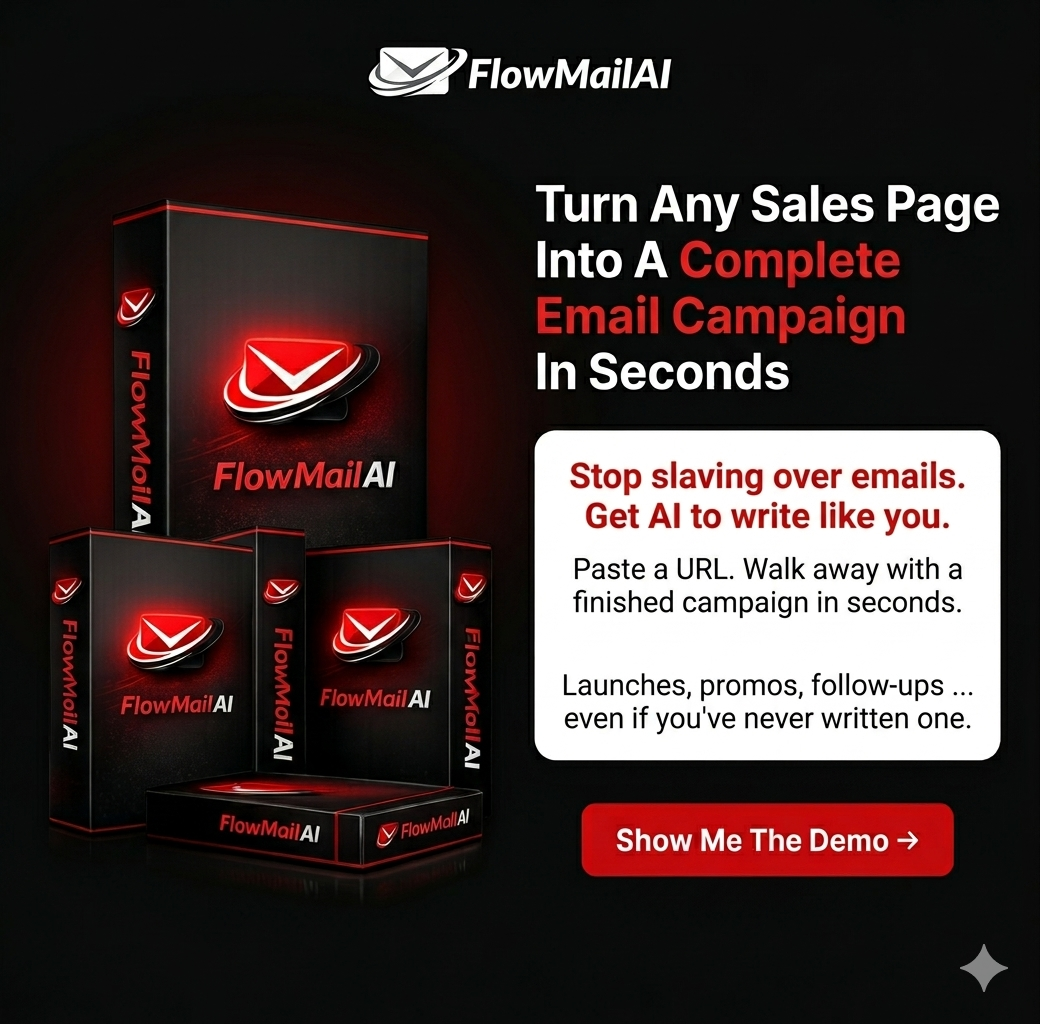
These days, the tool I lean on is FlowMail AI. The idea is almost annoyingly simple. You give it the sales page or the offer you’re promoting, and it reads it, works out the angles, and builds the whole campaign for you. Launch emails. Follow-ups. Affiliate promos. A full sequence with subject lines and structure already in place, in about the time it takes to make a coffee.
It doesn’t replace the thinking I described above. It does something more useful. It hands you a complete, structured draft that already has the shape right, so instead of staring at nothing, you’re editing something. And editing is easy. Editing is where your voice goes in. Starting is the hard part, and that’s exactly the part it takes off your plate.
I’m not going to pitch it here. You’ll see it in the sidebar and at the foot of this post if you want to take a proper look. What I will say is this: if the blank screen is the reason your list hears from you once a month instead of once a week, the fix isn’t more willpower. It’s removing the blank screen.
The bit that actually matters
Your list is the most valuable thing you own online. Not your website, not your social following. Your list. And a list you don’t mail is a bank account you never withdraw from.
So the goal was never “write more emails”. It was “stop letting the hard part stop you”. Get the shape right, sound like yourself, make one clear ask, and don’t start from zero if you don’t have to.
Do that, and mailing your list stops being the job you avoid and starts being the one that pays you.
You Could Be Just One Simple Letter Away From The End Of All Your Financial Worries...
... And If You Enter Your Mailing Address Below I Can Show You Exactly How To Write It!
Privacy Policy: We value your privacy. You can unsubscribe from receiving future emails with 1 click at any time.