The Underrated, Easy Way To Build An Email Sequence That Sells
I used to feel like my whole email list ran on me personally. If I did not sit down and write something new, nothing happened.
No open, no click, no reply. Just a quiet inbox and a nagging feeling that the whole thing was slipping.
If you send emails to your own list and feel exactly the same way, this one is for you.
An email sequence, written once and left to run, changes that completely. It is not a trick and it is not complicated. It is a handful of emails, built in the right order.
They keep introducing you to new readers long after you have stopped thinking about them. Get it right, and your list keeps working while you are doing something else entirely. Gardening, sleeping, or answering help desk tickets, like I do most days.
The Treadmill Most Of Us Are Still Running On
For years I treated my list the same way most people do. Write something today, send it, then wonder what on earth to write tomorrow.
Skip a week and the whole thing goes quiet. Nobody replies. Nothing sells.
And to be honest, some weeks I simply did not have anything new to say.
That is not a personality flaw. It is just what happens when every email you send has to be invented from nothing, on the day you send it.
A System I Built Long Before Email Existed
The idea of building something once and letting it run is not new to me, even though I only applied it to email fairly recently.
Back in 1972, while on a six month university placement, I worked with a local library adding barcodes to all their books. An email sequence works the same way for every new subscriber. That system worked the same way for every single borrower who walked through the door.
The librarians would swipe a light pen over the barcode to check a book in or out. That replaced stamping and filing a paper ticket by hand each time.
Nobody had to reinvent that process for the next customer, or the next, or the two thousandth. Somebody built it once, properly, and then it simply kept doing its job.
An email sequence works the same way, it is built once and it keeps doing its job for every new person who joins.
That is the whole shift. Not writing faster. Writing something once, in the right order, and then stepping back and letting it work.
What Actually Belongs In A Sequence
A working email sequence does not need to be clever. It needs a clear job for each email.
Some emails open a small gap of curiosity. Some teach one small, useful thing on their own. Some simply remind a reader why they joined your list in the first place.
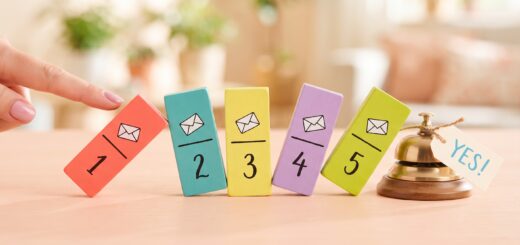
Picture five emails written for someone who has just signed up for a simple guide. The first thanks them and delivers what they asked for. The second tells a short story about why the guide exists.
The third teaches one small thing they can use straight away. The fourth answers the question most new readers ask first. The fifth points them, gently, toward the next step.
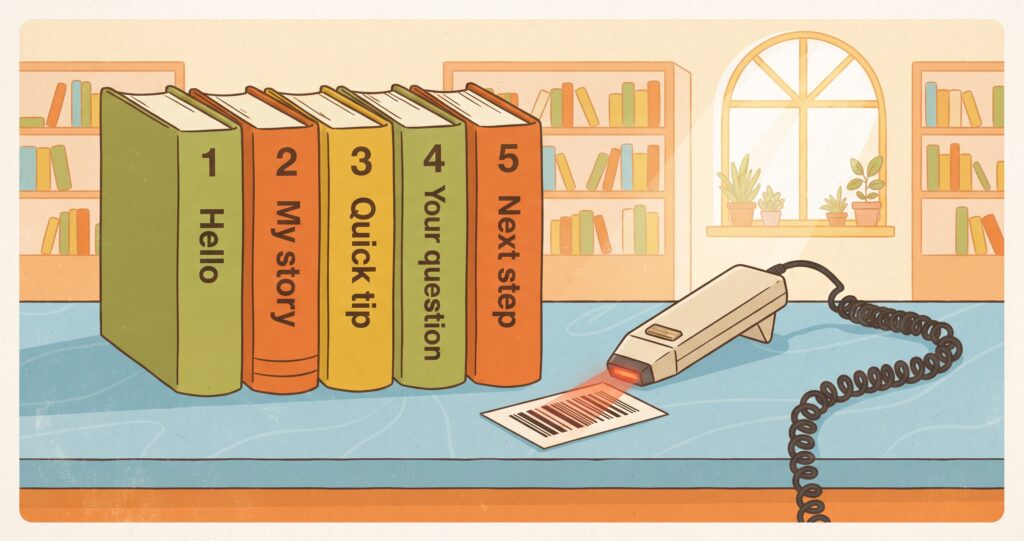
Nobody has to sit down and invent that order for the six thousandth new subscriber. It just runs.
The order matters more than the number. A handful of well placed emails will do more than twenty rushed ones sent in a hurry, whenever you happened to remember.
Write One Properly Before You Write Five Badly
Here is where most people, myself included at one point, get stuck. They write the first two or three emails, feel pleased with themselves, then get pulled back into the day job. The sequence sits half finished in a folder, doing nothing for anyone.
I have written about this same idea before. Finishing what you start matters more than spreading yourself across too many projects, and I cover it in other articles I have shared recently. It keeps showing up, because it keeps being true.
An unfinished sequence cannot sell anything. Three good emails sitting in a draft folder are worth exactly nothing until the rest are written and switched on.
So write the first email properly. Get it doing its one job well. Then write the second.
You do not need all of it perfect on day one, you just need it finished.
The Rule That Keeps It From Feeling Like Nagging
None of this works if your sequence feels like a stranger knocking on the door every single day asking for something.
Most emails in a good sequence should help first. Only a smaller number should ever ask for anything clearly. Think of it as being a welcome guest most of the time, and only occasionally the person with a request.
Say four emails out of five simply help, teach, or entertain, and only the fifth ever makes a clear ask. That is not a strict formula. But it is roughly the shape that keeps a sequence feeling like something the reader wants in their inbox, rather than something they tolerate.
Get that balance right once, inside a sequence you build a single time, and every future subscriber meets the same fair, well paced relationship. The kind you would want if you were the one reading it.
You Do Not Need A Big List To Start
This is the part that stops most people before they begin. They assume a sequence like this only matters once there are thousands of subscribers to justify the effort.
It is really the opposite. A finished sequence works just as well for your fiftieth subscriber as it will for your five thousandth.
Build it while your list is still small, and modest. A local tutor with thirty names on a list benefits from a finished sequence just as much as a large membership site does. The sequence does the same job either way: turning a new name into someone who trusts you.
Every person who joins from that point forward meets the finished version, not something you are still figuring out as you go.
If putting a full sequence like this together feels like the missing piece, that structure is covered fully inside Lazy Way To Email Riches. It walks through the whole approach, email by email.
It covers the order, and the thinking behind why one kind of email gets opened while another gets deleted. If you want to go further than building your first sequence alone, it is worth a look.
You do not have to write eighteen emails this week. Write one properly. Finish it.
Then write the next one. Bit by bit, that is how a list stops depending entirely on you, and starts working quietly on its own.
Talk soon, Jennifer Caroline

You Could Be Just One Simple Letter Away From The End Of All Your Financial Worries...
... And If You Enter Your Mailing Address Below I Can Show You Exactly How To Write It!
Privacy Policy: We value your privacy. You can unsubscribe from receiving future emails with 1 click at any time.