Is Real Patience The Overlooked Skill AI Can’t Replace?
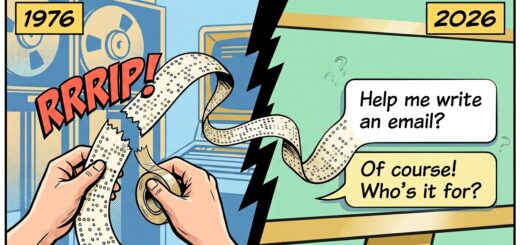
I’ve been around computers since programs were fed in on punch tape, and I have never once said AI is easy, not really, not in the way people keep being told it is.
Lately I’ve noticed something that catches even me off guard. AI is moving fast enough that I, with fifty years in computing behind me, sometimes struggle to keep pace with it.
But here’s the question worth asking. What AI can’t replace matters more than what it can, and almost nobody seems to be asking it out loud.
You have probably felt some version of this too, even if you have never put it into words.
Even I Can’t Keep Up, And That’s The Point
Internet marketing has quietly turned into “AI anything.” Information publishing and digital products, the very categories I built my own online business around, seem to have all but disappeared from the conversation.
Walk into any internet marketing forum right now and count how many threads are about ChatGPT prompts. Then count how many are about writing an actual book, or building an audience slowly over years. The second kind used to fill entire forums. Now they are the exception, tucked away between AI workflow threads, as if patience itself has become a niche topic rather than the whole point.
That could sound like bad news.
I don’t think it is.
When something gets easier to produce, the parts that were already hard to fake tend to become worth more, not less. Patience is one of those things. So is knowing there’s a real person on the other end of a support ticket who cares whether you’re stuck.
I’ve spent ten years, and counting, on a customer support desk, long before AI could write a reply for me. What I learned there is that people don’t just want their problem fixed. They want to be spoken to like a normal person, not handled by a script.
I’ve had people apologise before they’ve even finished typing their question, bracing themselves for being made to feel stupid. That reaction alone tells you something about how they’ve been treated by tech before. Patience, in that moment, isn’t a soft skill. It’s the entire service.
Think about the last time you were stuck on something technical and had to ask for help. What you wanted, most likely, was not the fastest possible answer. It was someone who didn’t make you feel small for asking, who stayed with you until it made sense, not just until the ticket was closed.
What AI Still Can’t Do
AI can answer a question in half a second. It can’t sit with someone who’s confused and stay patient about it while they work up the courage to ask again.
It can explain a setting perfectly well in a paragraph. It can’t notice that someone’s hesitant to click anything at all because they’re worried they’ll break something.
It can walk someone through resetting a password in three tidy steps. It can’t tell, from the tone of a message, that the person typing it has already tried four times and is close to giving up. What they need then is reassurance, not more instructions.
When something gets easier to produce, the parts that were already hard to fake tend to become worth more, not less.
You have probably experienced both sides of that. A chatbot that answers instantly but somehow leaves you more confused than before, and a person who takes an extra two minutes and leaves you feeling like you finally understand what just happened.
That’s not a small difference.
It’s the whole difference, and it’s the reason some businesses are quietly becoming more valuable while others panic about being replaced.
One thing I’ve noticed in other articles I have shared recently is how often this same point shows up, outside tech support too. A real explanation still beats a script, whatever the industry.
The Businesses Quietly Becoming More Valuable
Community is one of them. AI can answer a question, but it can’t replace belonging, and people are increasingly looking for both.
Curation is another. There’s more information online now than anyone could read in a lifetime. The people who filter it properly, and tell you what’s worth your time, are becoming more useful, not less.
You already do a version of this filtering every day, deciding what’s worth your attention and what isn’t. The people who help you do that well, for the parts of life you don’t have time to research yourself, are quietly becoming some of the most valuable people you know.
Coaching, done properly, is a third. Knowledge gets someone started. A real person paying attention gets them across the line.
A course can hand someone a checklist. It can’t notice that they’ve stalled on step two for three weeks running, or ask why, or wait for the honest answer. That noticing is worth paying for, and it’s exactly the part AI hasn’t found a way to fake.
None of that needs to be complicated. It just needs someone honest about where the value now sits, rather than someone chasing whatever tool launched this week.
Where This Leaves You
If you’ve ever felt behind because tech moves faster than you can follow, that isn’t a personal failing. I’ve always believed everyone has their own God-given skills and talents.
For some people that’s tech. For others it’s patience, or an eye for detail, or the ability to explain something plainly enough that it finally clicks for somebody else. Not having a talent for keeping up with every new AI release isn’t a weakness, it’s just not what you were given.
Maybe you’ve spent years getting good at something that has nothing to do with computers at all. Listening properly, staying calm when someone else is frustrated, explaining a complicated thing simply. None of that shows up on an AI leaderboard. All of it is still in demand.
What AI can’t replace in you might be the very thing someone else is quietly looking for. You don’t need to compete with a machine at speed. You need to be good at the parts a machine still can’t touch.
What you were given might be exactly the thing AI can’t touch. That’s worth remembering the next time a headline tells you to panic.
If You Want To Build Something Around What You Already Know
If any of this has you thinking about turning what you already know into something steady, there’s a training for that. It’s called Six Figures A Year In Information Publishing, and it walks through exactly that. It goes from picking a topic through to putting it in front of the right people.
It’s built for people who’d rather build one thing well than chase every new AI tool that turns up. If the idea in this article has stuck with you, it’s worth a look.
AI will keep getting better at answering questions. It still won’t be the one who notices you’re stuck, or stays patient long enough to help you get unstuck properly.
That part is still down to us, the part AI can’t replace. I’d rather be good at that than good at keeping up with every new AI release this month.
Talk soon,
Jennifer Caroline