Why A Better Email List Beats A Bigger One
You keep hearing the same number thrown around. Ten thousand followers. Fifty thousand subscribers. A list so big it practically sells for you while you sleep.
Meanwhile your own list sits at a few hundred names, and some days it feels like nobody is even reading what you send. You wonder if you are doing something wrong, or if you simply started too small to ever matter.
Here is what almost nobody tells you plainly enough. A focused email list of the right people will often earn you more than a sprawling one full of people who were never going to buy anything from you in the first place.
Size is not the thing that decides whether your list pays off. Fit is. And once you see that difference clearly, the pressure to chase a bigger number starts to fall away.
The Follower Count Trap
It is an easy trap to fall into, because almost everyone online talks in round numbers. Followers. Subscribers. Reach.
None of that tells you whether those people actually want what you have built, or whether they simply clicked once and forgot you existed.
A list of twenty thousand people who signed up for a free gift and never opened another email is not an asset. It is a very long list of names that cost you time and trust to gather, and gives almost nothing back.
Picture two people running an email list in the same niche. One has built a broad list open to everyone remotely interested in making money online, and sends the same general message to all of them. The other has built a narrower email list around one specific kind of reader with one specific problem.
The second list is smaller on paper. It also opens more emails, clicks more links, and buys more often, because nobody on it is wondering whether the message was meant for them.
Why Smaller Often Means Stronger
Think about the difference between a list built around everyone in general, and one built around a clearly defined group with a clearly defined need.
A list of two thousand people who all share the same specific problem will usually behave very differently from a list of twenty thousand people with almost nothing in common. It opens your emails. It replies. It buys the thing that solves its problem, because that is exactly why it joined in the first place.
A smaller list of the right people will always outperform a larger list of the wrong ones.
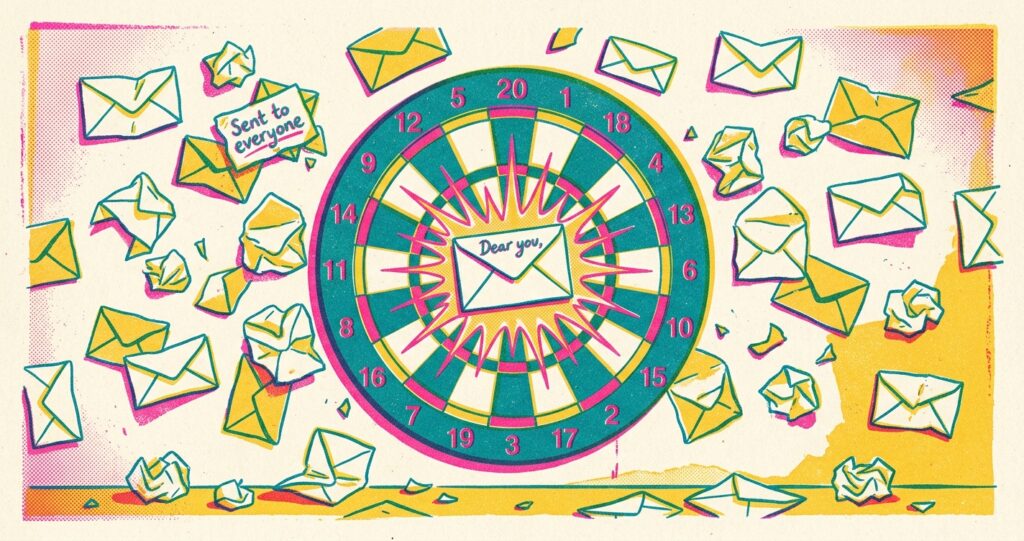
That one line is worth sitting with before you build anything else this year.
What My Own First List Taught Me
My own experience with this goes back further than I expected, before I ever heard anyone put it into words.
Back in 2015, I joined John Thornhill’s training program and built a video course called Breakthrough List Building. It was not aimed at everyone with an inbox. It was aimed at a narrow group of people trying to learn one specific skill, and nothing else.
That one launch made around $1,000. Then this year I launched FlowMailAI which make around $2000. This describes my launch outcomes, results are not typical and are not a guarantee of income. But it was real, and it was mine, and it taught me something I still rely on today. The list did not need to be huge to produce a result. It needed to be the right size for what I was actually offering.
The same thing is true of the list you are building right now, however small it feels to you at this moment.
Building Something People Actually Want
If your list is small, the useful question is not “how do I get more people on it?” It is “do the people already on it feel like I built this for them specifically?”
A general newsletter about making money online competes with thousands of other general newsletters about making money online. A newsletter built for one clear kind of reader, with one clear kind of problem, has almost no real competition at all.
Think of the difference between a newsletter built for everyone interested in making money online, and one built for the person who keeps abandoning a new tech tool halfway through setup, frustrated and ready to give up on it. The first promises everything to everyone and ends up meaning very little to any single reader. The second speaks to that exact person from the first line. That is the difference a focused email list makes, and it shows up in whether the email gets opened at all.
I have written more about this kind of focused thinking in other things I have shared recently, and it keeps turning up in different shapes once you start looking for it.
Ask yourself who you are actually writing to. Not “people interested in online business” in general, but the person who feels overwhelmed by tech, or confused by a tool they were told would make everything easier, or quietly embarrassed that they still need to ask. That person reads every word you send, because you are clearly talking to them and nobody else.
Start Where You Are, Not Where You Wish You Were
You do not need to wait until your list reaches some imagined, respectable size before any of this starts working.
Look at the people already on your list today. What do they keep asking you? What do they struggle with, again and again, in slightly different words each time? That is your next email. Not a guess at what a bigger audience might want, but a direct answer to the people who are already there.
A short, consistent email that solves one real problem will do more for your reputation than a long, polished one sent to people who never asked for it.
Say three people on your list mentioned, in slightly different words, that they can never find time to write to their own list consistently. That is not three separate problems, but one answer waiting to be written, aimed squarely at the people who already told you what they needed. Send that one email, and watch who replies.
Where This Naturally Leads
If building that first proper sequence feels like the part you keep putting off, you are not the only one. Getting new subscribers to stay engaged past the first few emails is its own skill, and it is one I wish somebody had explained to me plainly years ago.
Nick James built a complete walkthrough of exactly this inside Lazy Way To Email Riches, covering what a welcome sequence should actually say and how to keep a new subscriber opening your emails well past the first week. If you want to go further than what I have covered here, that is a sensible next step rather than a sales pitch.
A welcome sequence is often the one part of an email list that gets left to chance, even though it is the first real conversation a new subscriber has with you. Get it right, and that person reads what you send for months. Get it wrong, and they quietly stop opening after the second or third email, without ever telling you why.
None of that requires fancy automation or a big budget. It requires knowing exactly who opens your emails and why, then writing the next one for that person specifically.
Your list does not need to be enormous to matter. It needs to be built for somebody specific, treated with a bit of patience, and given a reason to keep opening what you send. Start with the people already there. The rest tends to follow.
Talk soon, Jennifer Caroline